Fifteen Restaurant
About: Fifteen, a global social enterprise with young people at its heart, has four restaurants worldwide – Amsterdam, Cornwall, London and Melbourne – all of which operate a pioneering apprenticeship scheme, alongside the day-to-day running of the restaurants.
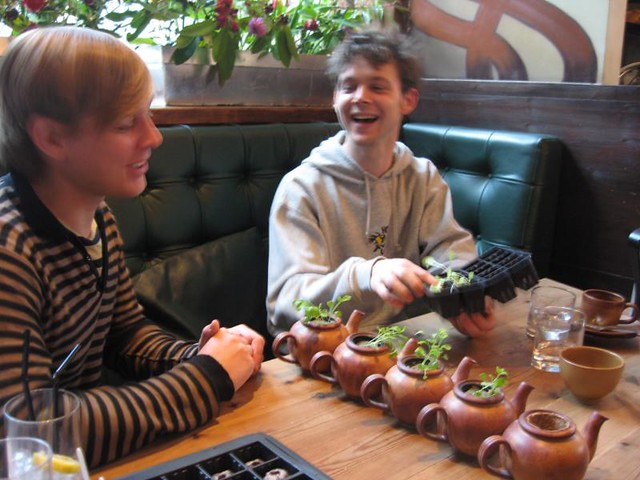
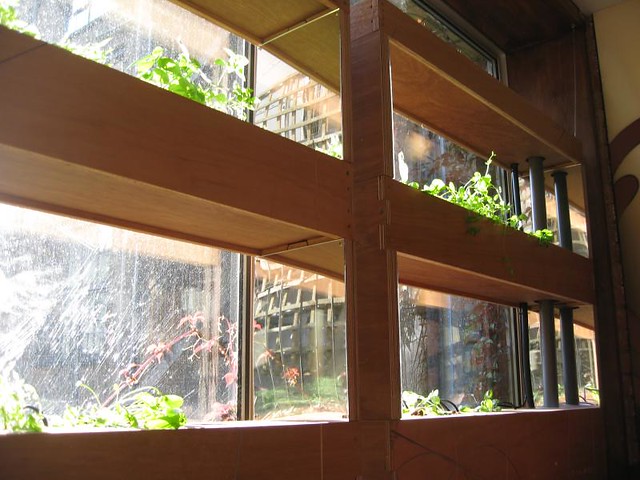
Design: Together with Fifteen staff an indoor, hydroponic window farm was developed and installed in the restaurant to grow specialist in-house herbs and garnishes. This was a public and participatory experiment to evaluate whether high quality food could be grown in-house and used in the day-to-day preparation of food.
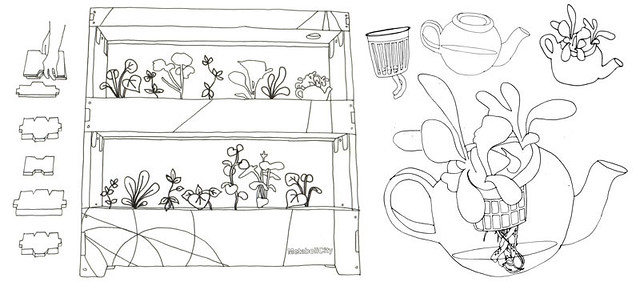
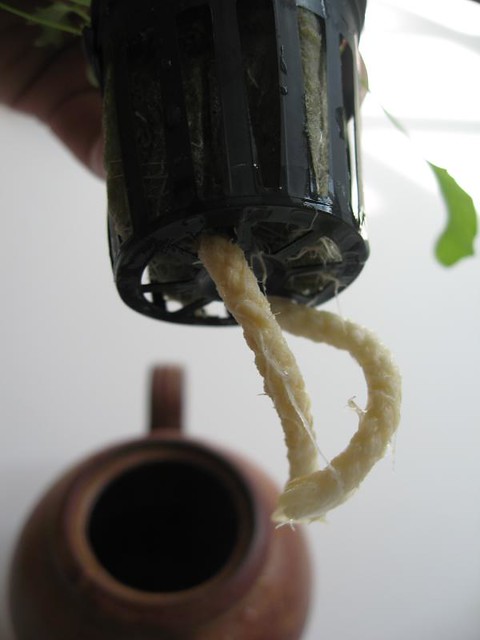
Growing Methods: Hydroponics is a method of growing plants without soil in a nutrient rich water solution, where mineral elements essential to plants are dissolved in water. Often a controversial technology but not a new one as it has been used by many different civilizations throughout ancient history. It is a highly controlled method suitable for indoor and urban environments where healthy soil is not yet available. Benefits include elimination of soil born pests and use of pesticides, reduces the amount of water used compared to soil based methods and you can control the nutrients to achieve a higher yield of crop.
Storytelling: ‘Interviewer 2: What do you think about the idea of growing food in a restaurant? (Participant B): I think it’s a brilliant idea, I really do. I think it should be everywhere… people come here because of what they see Jamie do on television. Get it upstairs, downstairs, in the toilets, everywhere. People will still look at it, they’ll find it funny or they’ll ask you about it, they’re not going to be offended or insulted, they’re probably going to think it’s a good idea. I mean, if you look at the River Café, one of the things it’s famous for is growing it’s own herbs and certain vegetables…’ (March, 2009)
Opportunities: A curious chef and engaged staff involved in the participating team.
Challenges: The most commercial of the four sites, the space at fifteen is more aesthetically demanding than the other sites and the grow structures need to fit in with the restaurants branded image. The grow kit also needs to sit within a very busy dining room full of customers. The space is highly functional, design and programmed. The staff rotas mean that tending time must be carefully planned. ‘Kids on a Saturday morning’ (participant B) create havoc in the space. The participant interviewed was not comfortable using social networking website.
The Aims: The aim here is to develop imaginative ways of integrating planting into decorative spaces in a busy restaurant environment. Also, another aim is to be able to use the produce in the restaurant kitchen.
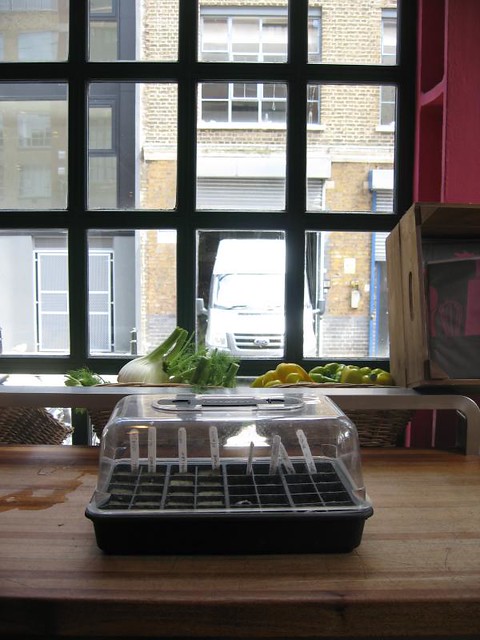
Intervention: Replace decorative spaces in the upstairs dining room with planters growing herbs and chard.
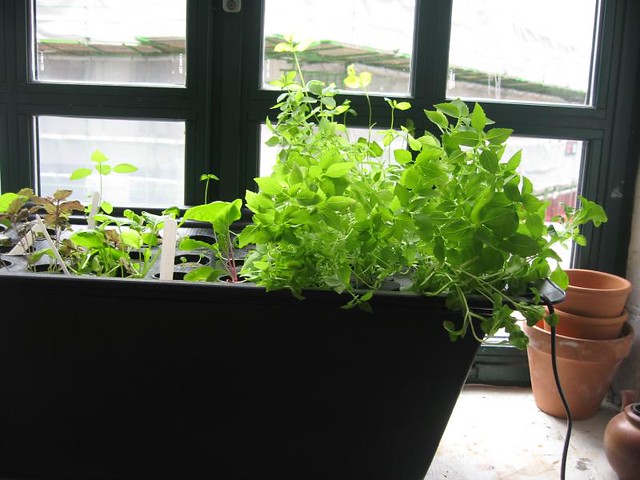
Background Research & Expertise: ‘I think it’d be nice to take some pictures, because the Romanesque that I’m growing at home, the seeds are only about that big at the moment, but they’re the same colour as the florets of Romanesque, which I wasn’t expecting. And chard, is meant to be really good, when it gets to about that big, you get like red, orange, yellow, green sprouts.’ (Participant B)

Dream scenario: ‘capture people’s imagination and be a talking point.’ (Participant C)
Key insights/ inspirational triggers for design:‘why pay for it when you can take the seeds that you put in the bin.’ (Participant B)
See our photo journal for Fifteen Restaurant on Flickr here!